
The principles of researching the mutual influence of dances (using the example of tango and its predecessors)
(Dmitry Nikitin)
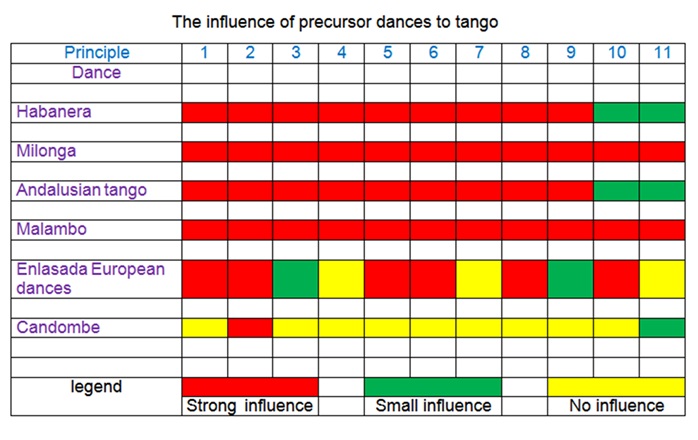
The history of the tango's formation (1854–ca. 1900) is well documented. This world-famous dance is truly folk and has absorbed various cultural traditions. It provides a useful model for researching the mutual influence of dances. Studying the history of the tango and analysing its predecessors, such as the Habanera, the Milonga, the Andalusian tango, the Malambo, the European enlazar dances and the Candombe, allows us to formulate the principles proposed below:
 Gradual changes over time.
- Contact between dances in space and time.
- Rhythm and other musical characteristics.
- Identical lyrics, sizes and themes.
- Changes in choreography, including not only movements and figures, but also types of sets, drama, participants and their roles.
- Same native dancers.
- Similar ideas.
- The existence of a borrowing mechanism, including its goals and reasons.
- Presenting the dance to borrowers in a way they can understand.
- The borrowed dance should be widely represented.
- Conducting a linguistic study of dance-related words.
Thus, researching the mutual influence between dances is a multifactorial procedure. The same principles should be applied to the process of reconstructing historical dances. The table below shows the influence of predecessor dances on tango.
Dmitry Nikitin, Vladimir, Russia
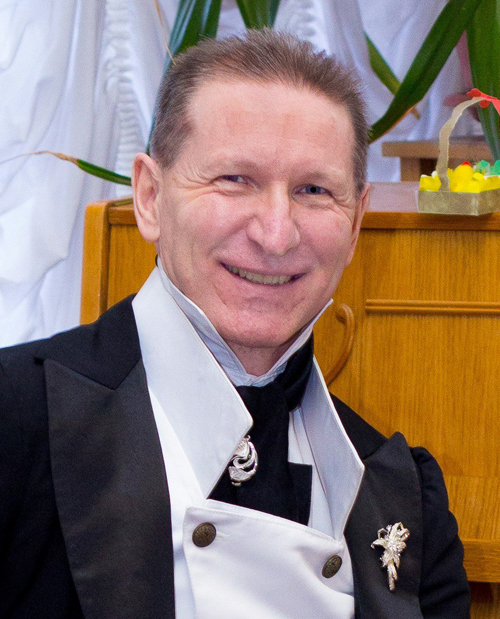 Dmitry Nikitin began to study historical social dance in 1975 at the age of 16 under the guidance of the choreographer-methodist of the Ministry of Culture of the USSR Golden O. D. For a long time, he worked in the system of higher and special education, and also taught various types of dance. He obtained his PhD in 1989. In 2011, he founded the Historical and Social Dance Club in Vladimir. He is currently its head and teacher. His areas of activity include the reconstruction of 19th-century and modern dances, dance theory, and the theory and practice of dance pedagogy, as well as the organisation of historical events. He has published several articles on dance reconstruction and delivered lectures at conferences.
