
Dancing and Democracy: critical transitions in English theatre dance 1642 – 1660
(Anne Daye)
The English Civil War of 1642 was followed by the Commonwealth or Interregnum, a form of republican government under Oliver Cromwell, until the Restoration of the monarchy in 1660. Subject to a more powerful Parliament, Charles II did not have the same power or finances as his Stuart predecessors, resulting in profound change to theatre arts in Britain.
The court masque had fostered the emergence of a new profession of dance in England which was at a critical point of development when war disrupted lives and closed theatres. This paper will trace evidence for a hybrid form of the court masque combining drama and dance in the 1630s, a prototype of the ballet d’action, performed both in court settings and in the public theatres. This new genre could be organised to conform with the strictures of that regime. The theatrical entrepreneur, William Davenant, with a licence to open London theatres in 1660, was able to mount performances of drama, opera and dance that the royal court could not afford. Theatre dance had to survive in the commercial environment of the public theatres, subject to economies of scale but also freedom to experiment.
The timing of the Civil War was critical, nor only for the British system of government but also for dance. It led to the development of parliamentary democracy but severed dance from state support, unlike most European countries. In fact, state funding for the arts, including dance, did not commence until after the Second World War, following another transition in official attitudes to the arts.
Anne Daye, Bedford, UK
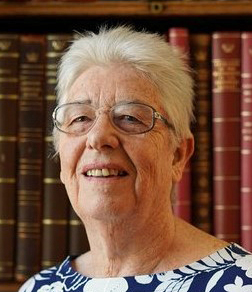 Anne Daye is a teacher, researcher and writer on historical dance, primarily of social and theatre dance of England within the European Renaissance. Her doctoral thesis 2008 broke new ground by discussing the performance and dance of the Jacobean masque. Investigating the vernacular forms of British dances is central to her studies: morris, country dance, reels, jigs, hornpipes. Anne publishes widely, most recently an article on Shakespeare’s use of masque for The Oxford Handbook of Shakespeare and the Dance 2019 and on court dancing for Performances at Court in the Age of Shakespeare for Cambridge University Press 2019. She also reconstructs dances from the original sources, publishing dance instruction books with extensive contextual notes accompanied by recorded music for HDS. Recent ones are Dances of the French Courts: 16th century Dance, Music and Song from France, A New Collection of Dances for Jane Austen and Dances for Queen Victoria: Music and instructions for country dances, quadrilles, polka, schottische and reels by Joseph Lowe,dancing master to the royal family
Following a career as lecturer in Dance History in HE Dance Departments, Anne continues to research in retirement and is Director of Education and Research for the Historical Dance Society.
 Emily Winerock teaches dance history at Point Park University in Pittsburgh, PA. Her research focuses on the practices and politics of dance in 16th- and 17th-century England. She received her B.A. from Princeton University, M.A. from the University of Sussex, and Ph.D. from the University of Toronto. Her publications include essays in Journal of the Northern Renaissance (2025), Shakespeare Jahrbuch (2021), Borrowers and Lenders (2017), and Dance Chronicle (2016), as well as chapters in The Oxford Handbook of Shakespeare and Dance (2019), The Oxford Handbook of Dance and Competition (2018), Playthings in Early Modernity (2017), The Sacralization of Space and Behavior in the Early Modern World (2015), and Worth and Repute: Valuing Gender in Late Medieval and Early Modern Europe (2011). She also serves as co-chair of the Early Dance Working Group of the Dance Studies Association, co-director of the Shakespeare and Dance Project, and copy editor for the journal Dance Chronicle.
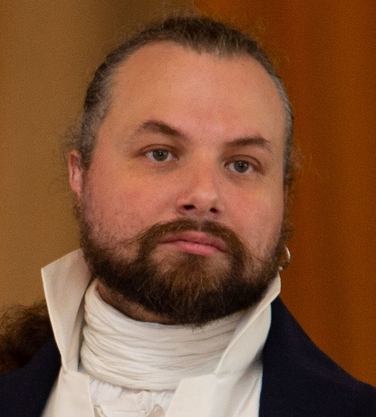 Dmitry Filimonov started his dancing career in 1993 as a dancesport dancer and came to early dances in 2002. Since 2007 he teaches historical dance in “Golden Forests” early dance school (a co-leader of the school). He is the head of the historical dance research seminar in Moscow. Dmitry gave lectures at many international conferences and has seven published articles on early dance topics from 16th to 19th.
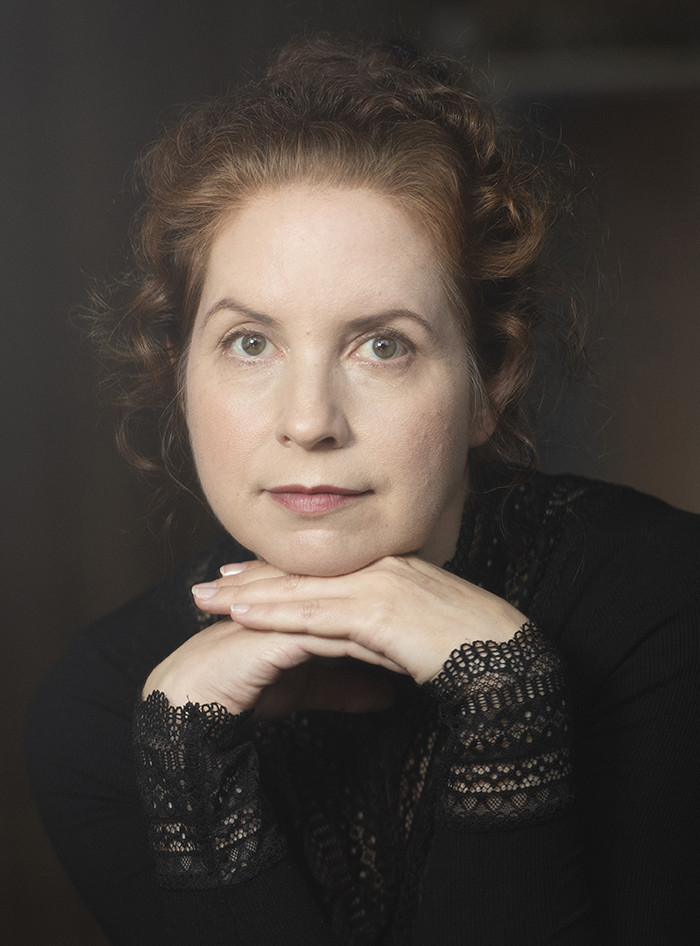 Gerrit Berenike Heiter arbeitet aktuell an ihrem kumulativen Dissertationsprojekt der Theaterwissenschaft an der Universität Wien. Ihre Forschungsarbeit beschäftigt sich mit europäischen Druckerzeugnissen zu Tanz von 1573 bis 1717. Sie unterrichtet Tanzgeschichte an der Hochschule für Musik und darstellende Kunst Mannheim. In ihrer künstlerischen Tätigkeit als Schauspielerin, Tänzerin und Pädagogin hat sie sich auf Körper- und Maskentheater, Commedia dell’arte, Barocktheater und historischen Tanz spezialisiert. Neben der Mitwirkung in barocken Musiktheaterprojekten ist sie im Rahmen zeitgenössischer Stücke zu sehen, die an der Schnittstelle zwischen Tanz, Musik, Performance und Theater stehen.
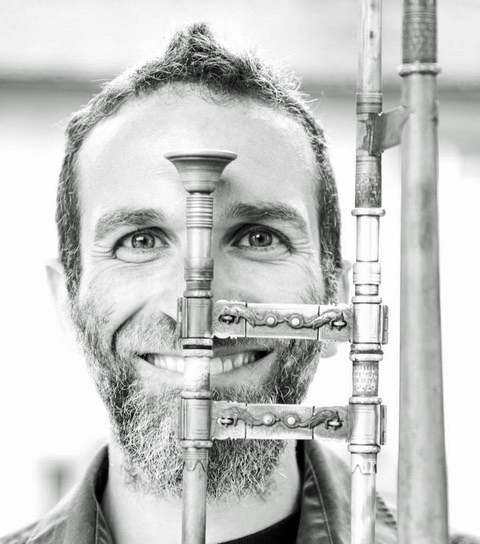 Adam Bregman is a trombonist, musicologist, and pedagogue whose performance, research, and teaching focuses on the late Middle Ages, Renaissance, and early Baroque eras. Adam strives to share his love for music of the past and his avid interest in historical performance practices playing historical trombones from every era, presenting his research, and working with musicians of all ages and abilities who share the same passion. His experience has led him to develop an approach to all areas of his musical work that inextricably combines practice and theory—engaging with music on its own terms—and adds insights from other disciplines. This working method pervades his teaching and his research, which focuses on the performance practices of wind musicians in the Renaissance and court dances of the fifteenth and sixteenth centuries. All while maintaining the highest level of artistry on stage, as co-director of Basel-based historical wind ensemble Capella Helvetica or performing with such European and North American ensembles as Oltremontano
