
Lectures
La Spagna - the story of the bassadanza and basse danse
(Adam Bregman)
Captivated by the enigmatic bassadanza and basse danse, scholars and performers have taken great pains to interpret, imagine, theorize, and recreate the performance practices of this lofty form of fifteenth-century court dance for over a century. But missing pieces of the puzzle have led to holes in our understanding of this genre, including the correlation of the choreographies to the accompanying music and regional peculiarities. This owes in part to the fact that, while two related, contemporary, Franco-Burgundian sources survive with music and choreographies, every other dance manual or collection contains choreographies or music at best. And a comparison of these sources presents a variety of musical or choreographic styles for which it hardly seems plausible to label with a single denomination—“basse danse” or “bassadanza”—especially looking further into the sixteenth century. There is one dance, La bassa di castiglia, or La Spagna, however, that has left a trail of music and choreographies throughout Renaissance sources—the only dance to survive in both Italian and Franco-Burgundian dance manuals, and with several contrasting choreographies and nearly 250 different musical settings—that marvelously come together to depict the evolutionary arc of this genre. Using this uniquely important dance, my paper tells the story of the extraordinary life of the basse danse and bassadanza in music and movement across time periods and geographic regions.
Adam Bregman, Basel, Schweiz
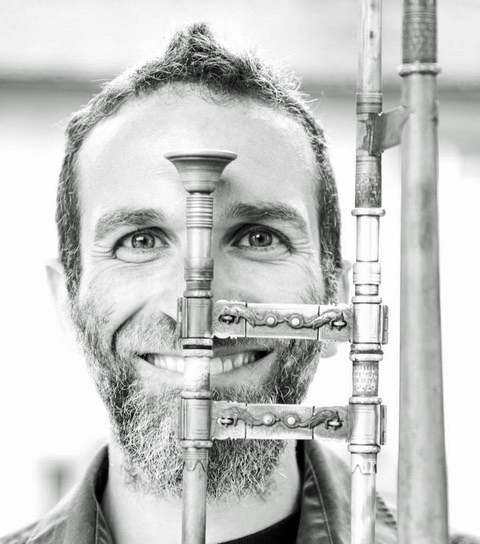 Adam Bregman is a trombonist, musicologist, and pedagogue whose performance, research, and teaching focuses on the late Middle Ages, Renaissance, and early Baroque eras. Adam strives to share his love for music of the past and his avid interest in historical performance practices playing historical trombones from every era, presenting his research, and working with musicians of all ages and abilities who share the same passion. His experience has led him to develop an approach to all areas of his musical work that inextricably combines practice and theory—engaging with music on its own terms—and adds insights from other disciplines. This working method pervades his teaching and his research, which focuses on the performance practices of wind musicians in the Renaissance and court dances of the fifteenth and sixteenth centuries. All while maintaining the highest level of artistry on stage, as co-director of Basel-based historical wind ensemble Capella Helvetica or performing with such European and North American ensembles as Oltremontano
(Belgium) and Ciaramella (Los Angeles), Adam endeavors to instill his fascination with early music in modern audiences. Whether in the form of musical strains or words, he strives to contextualize the music of the past by telling a story so that, through music, we may better understand our cultural history, ourselves, and the ever-changing world around us.
(Photography: Cécile Mansuy)
Local Traditions, National Controversies: Dance on Trial in a Time of Transition
(Emily Winerock)
Changes in religious doctrine and observance in late sixteenth- and early seventeenth-century England led to an abrupt and contested reconsideration of the acceptability of dancing in various contexts, from church sponsorship of morris dancers to dancing on Sunday to any form of ‘mixt dancing’ of men and women together. The lack of consensus about what constituted a ‘use’ versus an ‘abuse’ led to widespread disagreement over whether long-established dance traditions needed to be altered or eliminated. This presentation examines conflicting views of dance in two court cases: a 1599 fornication case from Great Coxwell, Berkshire and a 1613 Star Chamber case against participants in the annual Whitsun Revel in Rangeworthy, Gloucestershire. In Great Coxwell, a defendant causes an uproar in the court by arguing that skipping church services to go dancing was more reprehensible than having a child out of wedlock. In Rangeworthy, disagreement about the acceptability of the parish’s dance-filled Whitsuntide traditions led to verbal and physical confrontations between the constable and parishioners. These cases illuminate the tensions between those who saw dancing as both a symbol of, and the means for committing, sin and sacrilege, and those who understood dancing as a performance of, and contributor to, neighbourliness and community cohesion.
Emily Winerock, Pittsburgh, PA, USA
 Emily Winerock teaches dance history at Point Park University in Pittsburgh, PA. Her research focuses on the practices and politics of dance in 16th- and 17th-century England. She received her B.A. from Princeton University, M.A. from the University of Sussex, and Ph.D. from the University of Toronto. Her publications include essays in Journal of the Northern Renaissance (2025), Shakespeare Jahrbuch (2021), Borrowers and Lenders (2017), and Dance Chronicle (2016), as well as chapters in The Oxford Handbook of Shakespeare and Dance (2019), The Oxford Handbook of Dance and Competition (2018), Playthings in Early Modernity (2017), The Sacralization of Space and Behavior in the Early Modern World (2015), and Worth and Repute: Valuing Gender in Late Medieval and Early Modern Europe (2011). She also serves as co-chair of the Early Dance Working Group of the Dance Studies Association, co-director of the Shakespeare and Dance Project, and copy editor for the journal Dance Chronicle.
“From Ball Dance to English Country Dance: Continuity and Change in Early 18th-century England”
(Carol G. Marsh)
The Lorin manuscript Livre de Contredance (c1685) supplies Baroque dance steps for 13 English country dances, but Lorin himself admits that there is no uniformity in the steps used by English dancers. I suggest that a more organic approach to the problem of foot work in English country dancing might be provided by the notated ball dances that share the same titles and music as their country dance offspring, most of which were published within a few years of their ball dance predecessors.
This paper will present several case studies of these dance “twins,” focusing on the following questions: was the original tune modified in any way, e.g., meter, key, length, phrase structure? are the floor patterns of the ball dance reflected in the country dance? are any Baroque steps prescribed for the country dance, and if not, what suggestions are provided by the music and step vocabulary of the ball dance?
I suggest that the cessation of notated ball dances in the 1730s was one factor contributing to the increasing simplicity and uniformity of English country dances.
Carol G. Marsh, Washington DC, USA
 Carol G. Marsh is a Professor Emerita at the University of North Carolina Greensboro, where she taught music and dance history for 28 years. She received her Ph.D. in musicology from The City University of New York in 1985 with a dissertation on early 18th-century French court dance in England. Her publications include La Danse Noble (with Meredith Little) and Musical Theatre at the Court of Louis XIV: ‘Le Mariage de la Grosse Cathos’ (with Rebecca Harris-Warrick). She has contributed articles and reviews to New Grove, Dance Chronicle, Dance Research Journal, and other publications.
She currently lives in Washington DC and worries constantly about the collapse of democratic principles.
Repertoires im Übergang - Antoine Pointels Tanzmusikpartituren und eine verschollene Tanznotation
(Giles Bennett)
Antoine Pointel (1660-1702) war ein Amsterdamer Musikverleger, der 1688 ("Deusiesme recueil des Dances et contre-dances") und 1700 ("Airs de Danses Angloises, Hollandoises et Francoises") Tanzmusiken inklusive der sonst oft fehlenden Bässe herausgab. Seine Drucke zeigen die Verbreitung und Anpassung verschiedener, teils national kodierter Tanzrepertoires und -formen: Französisch und niederländisch adaptierte, ursprünglich englische Country Dances; niederländische Nachkommen des Tanzrepertoires des frühen 17. Jahrhunderts; das "vieilles danses" Repertoire, das sich seit den 1650ern in Europa verbreitete; und, in seinem Druck von 1700, die neu auftretenden französischen "danses de ville".
Pointels Schwager Jean Eude du Temps war Tanzmeister an der Amsterdamse Schouwburg. 1695 bewarb er ein "Recueil" mit Contredanses, die in selbst erfundenen "caracteres" notiert seien, sowie "Tables generales des Positions" für die "changements" in "la danse Serieuse" und dem "Balet". Auf Grundlage von Pointels Tanzsammlungen und seinen Verbindungen können Hypothesen bezüglich des Inhalts dieser verschollenen Tanznotationsquelle formuliert werden.
Giles Bennett, München, Deutschland
 Giles Bennett, Historiker, wissenschaftlicher Mitarbeiter am Zentrum für Holocaust-Studien am Institut für Zeitgeschichte München, Tänzer im Ensemble "La Danza München" (Leitung: Jadwiga Nowaczek - www.barocktanz.de), Mitherausgeber von " Barocktanz im Zeichen französisch-deutschen Kulturtransfers: Quellen zur Tanzkultur um 1700" Hildesheim 2008, verschiedene Aufsätze zum Tanz vom 17. bis zum frühen 19. Jahrhundert und dessen Rezeption ab dem späten 19. Jahrhundert.
Contredances of 1760-1770s in France: a pot-pourri of interesting facts.
(Maria Derkach)
In the mid-eighteenth century, France saw the publication of hundreds of leaflets containing contredanses, which are believed to resemble one another. The notation for these contredanses and the textbooks about how to dance them seem to give exhaustive information. Yet any attempt to use all this for the reconstruction of a ball meets many problems, such as the direction and the length of the starting and finishing ronds, the number and types of contredanses for one ball, specific steps mentioned but not described in the text, etc. Other questions arise when we want to choose dances for a ball with a specific date and avoid those that were composed later. Finally, for a historian and a reenactor it is also important to know the way how they informed the participants about the list of dances before the ball.
A thorough analysis of different sources including those not containing notated choreographies and pot-pourris de contredanses allows us to enrich our knowledge of popular dances among contredanses françaises of 1760-1770s and even earlier.
Maria Derkach, Moscow, Russia
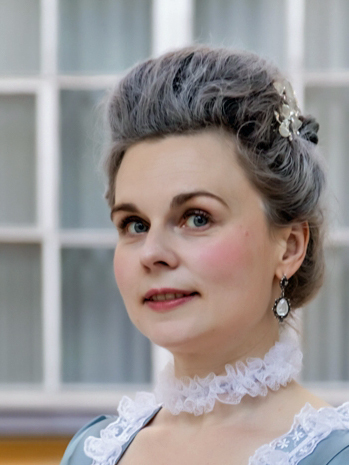 Graduated from Kaluga Dance College in 1998, she began to study historical dances in 2005. Today Maria is one of the leaders of the early dance school "Golden Forests", where she teaches classes of different levels on various topics from Baroque to XIX century social dancing. Maria has taught at regional workshops in Russia as well as abroad, delivered lectures at international conferences and published articles on early dance topics. She is currently a co-organizer of the Historical Dance Festival. Maria graduated from Moscow State University and holds a Ph.D. in mathematics.
Dancing and Democracy: critical transitions in English theatre dance 1642 – 1660
(Anne Daye)
The English Civil War of 1642 was followed by the Commonwealth or Interregnum, a form of republican government under Oliver Cromwell, until the Restoration of the monarchy in 1660. Subject to a more powerful Parliament, Charles II did not have the same power or finances as his Stuart predecessors, resulting in profound change to theatre arts in Britain.
The court masque had fostered the emergence of a new profession of dance in England which was at a critical point of development when war disrupted lives and closed theatres. This paper will trace evidence for a hybrid form of the court masque combining drama and dance in the 1630s, a prototype of the ballet d’action, performed both in court settings and in the public theatres. This new genre could be organised to conform with the strictures of that regime. The theatrical entrepreneur, William Davenant, with a licence to open London theatres in 1660, was able to mount performances of drama, opera and dance that the royal court could not afford. Theatre dance had to survive in the commercial environment of the public theatres, subject to economies of scale but also freedom to experiment.
The timing of the Civil War was critical, nor only for the British system of government but also for dance. It led to the development of parliamentary democracy but severed dance from state support, unlike most European countries. In fact, state funding for the arts, including dance, did not commence until after the Second World War, following another transition in official attitudes to the arts.
Anne Daye, Bedford, UK
 Anne Daye is a teacher, researcher and writer on historical dance, primarily of social and theatre dance of England within the European Renaissance. Her doctoral thesis 2008 broke new ground by discussing the performance and dance of the Jacobean masque. Investigating the vernacular forms of British dances is central to her studies: morris, country dance, reels, jigs, hornpipes. Anne publishes widely, most recently an article on Shakespeare’s use of masque for The Oxford Handbook of Shakespeare and the Dance 2019 and on court dancing for Performances at Court in the Age of Shakespeare for Cambridge University Press 2019. She also reconstructs dances from the original sources, publishing dance instruction books with extensive contextual notes accompanied by recorded music for HDS. Recent ones are Dances of the French Courts: 16th century Dance, Music and Song from France, A New Collection of Dances for Jane Austen and Dances for Queen Victoria: Music and instructions for country dances, quadrilles, polka, schottische and reels by Joseph Lowe,dancing master to the royal family
Following a career as lecturer in Dance History in HE Dance Departments, Anne continues to research in retirement and is Director of Education and Research for the Historical Dance Society.
'Whole Stories by Action': Pantomime Ballets on the Eighteenth-Century London Stage
(Moira Goff)
In 1717, John Weaver's 'Dramatick Entertainment of Dancing' The Loves of Mars and Venus was first performed at London's Drury Lane Theatre. In 1781, Gaëtan Vestris brought his version of Noverre's Medée et Jason – advertised as a 'Ballet Tragique' – to London's opera house the King's Theatre. These milestones in the history of theatrical dance are well known, but what happened with stage dancing that (to quote Weaver) told 'whole Stories by Action' in London's theatres in the intervening years? Although pantomime afterpieces and their dancing have been the focus of most research, this paper will explore pantomime ballet - of the sort that Weaver envisaged - on the London stage between 1717 and 1781, identifying other productions as well as other dancers and choreographers that influenced the genre and contributed to its development. I will concentrate on dancing at the Drury Lane and Covent Garden theatres, but I will also look at significant performances at the King's Theatre and pursue some of the continental influences that were evident at all three.
Moira Goff, Berkhamsted, United Kingdom

Moira Goff is a dance historian specialising in ballroom and theatre dance from the late 17th to the late 18th century. She has a particular interest in dancing on the London stage between 1660 and 1776, although her more general research occasionally extends as far as 1830. She has published many articles and papers and currently writes a blog Dance in History. Her book The Incomparable Hester Santlow: A Dancer-Actress on the Georgian Stage appeared in 2007. More recently she has published articles in Dance Research on the dancer and royal dancing master Leach Glover and her essay ‘From the Louvre to the Waltz: Changing Relationships within the Couple Dance’ will be published as part of a collection on dance and sociability early in 2026. Moira continues to reconstruct the notated dances of the 18th century as an integral part of her research work.
The ballerina's ascent:
pantomime, voluptuousness and the portrayal of women
in pantomime ballets during the second half of the eighteenth-century
(Béatrice Pfister)
With the rise of pantomime ballet in the 18th century, the audience was no longer supposed to admire dancers only for their beautiful body movements but also for their acting skills. How did this major transition affect ballerinas, traditionally lauded for both their natural attractiveness and talent? One might expect less biased male assessment; but the result was that voluptuousness was even more emphasized. This phenomenon was linked to the trend of libertine literature and ballet themes. But the mere addition of pantomime created an opportunity for ballerinas to be more seductive, even slightly provocative, when portraying passionate love stories, intense emotions or playing touching and ingenuous young women, often pursued by infatuated wealthy men. Our hypothesis is that while the late 18th century still featured extremely famous male dancers, a transition was underway, positioning women for a more prominent role in ballets, ultimately leading to their dominance over male dancers in the 19th century.
Béatrice Pfister, Paris, France:
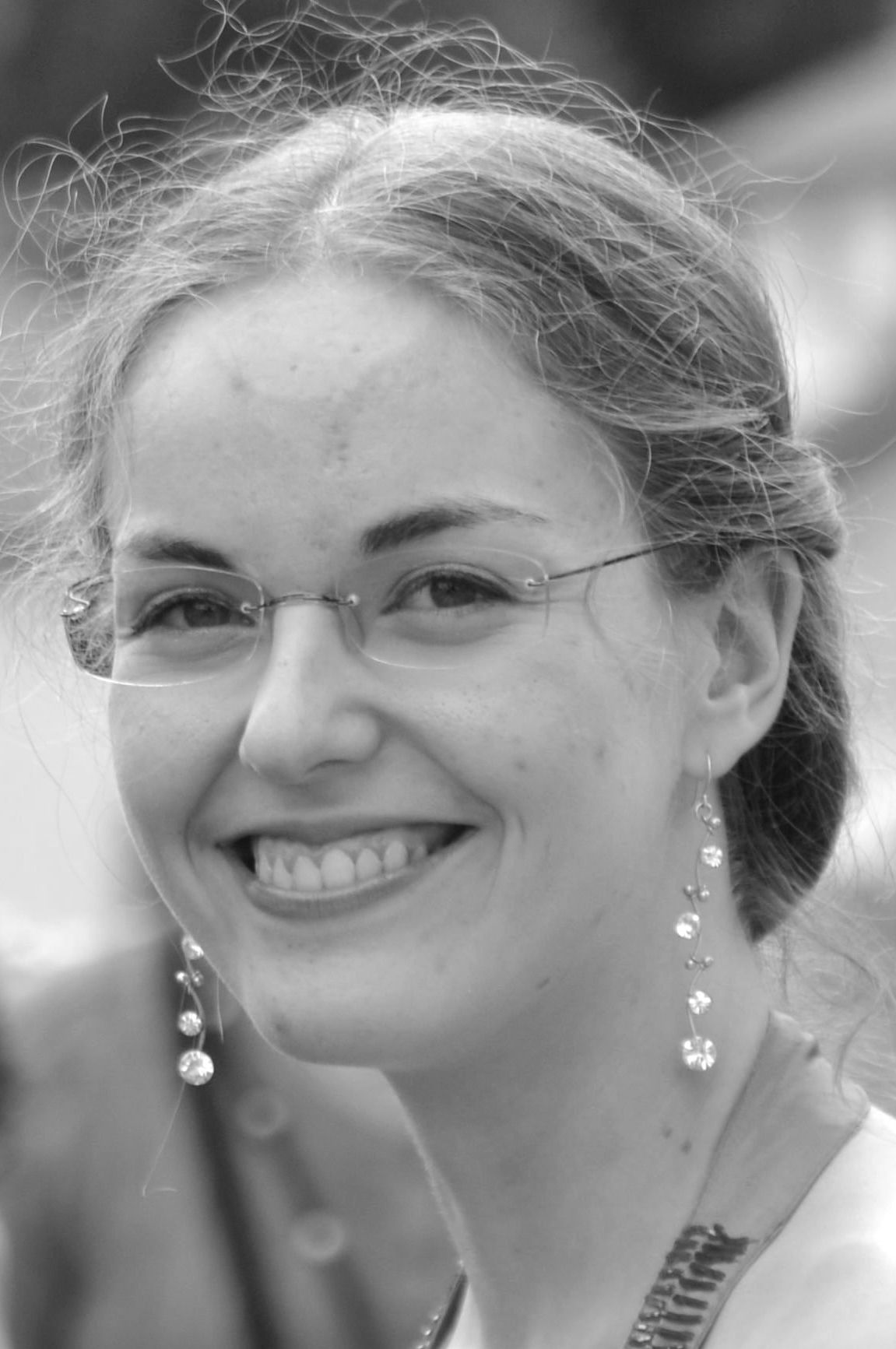 In 2009, Béatrice Pfister was admitted to the École Normale Supérieure (ENS) in Paris in the humanities. She obtained her Master’s degree in French literature in 2012. From 2013 to 2021, she held various teaching and research positions at French universities, including Sorbonne Nouvelle, Aix-Marseille, Versailles-Saint-Quentin, and Lille. Her teaching areas included world literature and French literature for literature students, as well as theatre history for students in the performing arts. In 2020, she defended her PhD in Comparative Literature at Sorbonne Nouvelle University in Paris under the supervision of Françoise Lavocat. Her dissertation, titled “Dance trying to conquer the status of art: apology and theory of ballet in French and Italian texts from the end of the 16th century to the end of the 18th century”, explored how dance in French and Italian writings from the late 16th to the late 18th century sought to establish itself as an art form.
Ballet at Vienna’s Kärntnerthortheater After the Napoleonic War
(Mary and Robert Riggs)
The Congress of Vienna (1814-15) ushered in the Biedermeier era of peace and the reaffirmation of aristocratic autocracies with their support of the arts but also Metternich’s repressive censorship of them. Peace promoted a thriving international exchange of talents and styles at the Kärntnerthortheater, the court’s venue for opera and ballet. Austrian composers collaborated with prominent dancers/choreographers from France (Aumer, Henry) and Italy (F. Taglioni, Astolfi, Samengo, et al.).
Ballets were performed on average twelve times per month but always as the second, longer half of a double bill. The first was either a comic one-act French operetta or a one-act Singspiel. Multiple societal influences determined this acute juxtaposition of comedic vocal works with serious, often tragic ballets. The censored scenarios of the ballets were based on historical, biblical, or literary sources, and many incorporated national folk dances from the multi-ethnic Habsburg Empire and beyond. PowerPoint excerpts illustrate this rarely studied preromantic pantomimisches ballet repertoire in which Marie Taglioni and Fanny Elßler launched their careers.
Mary Barres Riggs, Oxford, MS, USA
 Mary Barres Riggs (B.A., art history, Harvard University; M.A., dance history, University of Utah, thesis: “John Neumeier and the Symphonic Ballet: Third Symphony of Gustav Mahler.” She has presented papers at national and international conferences, including: the Society for Dance History Scholars, the Congress on Research in Dance, the Sounding Habsburg Conference in NYC, and the EADH Conference in Edinburgh.
She studied ballet with Leon Danielian, Kathleen Crofton, and at Balanchine’s School of American Ballet. She learned four major roles from Bronislava Nijinska and made her professional debut dancing the “Rag Mazurka” in Nijinska’s Les Biches at the Jacob’s Pillow Dance Festival. On a six-week tour of Europe with the American Classical Ballet (with Rudolph Nureyev as guest artist), she performed principal and solo roles in Les Biches, Chopin Concerto, Graduation Ball, Carnaval, and La Sylphide. She also performed with the Metropolitan Opera Ballet and for two years with the ballet of the Niedersächsische Staatsoper in Hannover.
Robert Riggs, Oxford, MS, USA
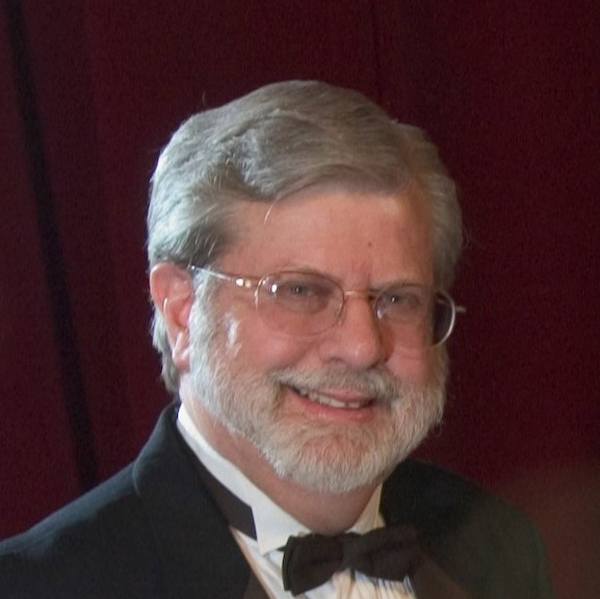 Robert Riggs (Ph.D., musicology, Harvard University) began his career as a violinist, spending five years performing with the Niedersächsisches Staatsorchester in Hannover. Most of his teaching career for musicology and violin was at the University of Mississippi, where he was Chair of the Department of Music, directed the University Artist Series, and performed with the Oxford Piano Trio. He has presented papers at numerous national and international conferences, and his publications include: articles on Mozart, performance practice, and aesthetics (in The Musical Quarterly, Mozart-Jahrbuch, Journal of Musicology, and College Music Society Symposium); two books, Leon Kirchner: Composer, Performer, and Teacher and The Violin (both with the University of Rochester Press); two chapters in The Creative Worlds of Joseph Joachim (Boydell and Brewer); and one chapter in Joseph Joachim: Identities | Identitäten (Olms Verlag).
Mary and Robert Riggs have made joint presentations at musicology conferences in London, Toronto, Vienna, and at the University of Massachusetts in Amherst. In 2024 they published “Bach’s St. Matthew Passion: Ballet by John Neumeier” in BACH: Journal of the Riemenschneider Bach Institute.
Ballet in Transition: 1789-1840
(Edmund Fairfax)
While broad dance-history surveys not uncommonly state that the art of ballet underwent significant changes during the years 1789-1840, there has been, however, little attempt to discern what specific changes affected the technique and style of dance in French theaters, changes which, in turn, were widely imitated in other theaters. This illustrated presentation will attempt to fill the void in part, discussing the dissolution of the old system of distinct dance styles, which informed stage-dancing in the eighteenth century before the French Revolution; the emergence of a new blended style under the influence of the superstar dancer Auguste Vestris during the Revolution; and finally the advent of a reactionary style associated with the age of Romantic ballet and specifically with Marie and Philippe Taglioni. The presentation will look at some specifics in technique and choreography, notably height of leg-extensions, port de bras, pointe-work, step innovation, and the formation of enchaînements.
Edmund Fairfax, Toronto, Canada
Edmund Fairfax is an independent dance historian specializing in eighteenth‑century ballet. His groundbreaking study The Styles of Eighteenth‑Century Ballet (Scarecrow Press) appeared in 2003. He is currently working on completing a major study to be called The Technique of Eighteenth‑Century Ballet, as well as a reconstructive study, with a critical edition of the score, of Maximilien Gardel's 1777 pantomime ballet La chercheuse d'esprit (with Mojca Gal), one of the “classics” of the period. His comprehensive research overturns a number of antiquated notions concerning early ballet. From 2003 to 2008 he was an assistant and adviser to the dance company Ballet Espressivo in Toronto. His choreography in the eighteenth‑century style has appeared on stages in Germany, Switzerland, The Netherlands and Greece, most recently at the Potsdam Early Music Festival (2024) and the Athens World Congress of Dance Conference (2025). He studied classical ballet in Toronto, where he lives, and has an academic background in English literature and music history (University of Regina) and theoretical linguistics (University of Toronto), with special interest in the history of the early Germanic languages, particularly Gothic and Old English.
Dance, Food and Politics: Choreography at/of Banquets in Early Modern Italy
(Petra Zeller-Dotlačilová)
In the early modern period, banquets, or sumptuous dinners, were much more than convivial moments around a table. They were both ritual and entertainment, representational events of the rulers, a total artwork of art where culinary art intertwined with visual and performing arts. Scenography and decoration, music and dance, meals and drinks were conceived and organised as a complete performance, with its own meticulously designed dramaturgy.
This paper will investigate various forms and roles of dance at banquets, as well as their general “choreography”, in various courts of northern Italy from the sixteenth to the eighteenth centuries. More concretely, the case studies include the spectacular “cene” at the Ferrara court of the d’Este family, dancing banquets of the Savoia in Turin, and Milanese events influenced by Spanish and Austrian rulers. Who danced and why? How does the choreography relate to the occasion of the event? Did the dance correlate with the food and drinks served, and if so, how?
Comparing events from various periods and places will allow us to observe the transformations, as well as similarities, in the use of dance for aesthetic and political purposes at the banquets.
Petra Zeller-Dotlačilová, Basel, Schweiz

Petra Zeller Dotlačilová holds PhDs in Dance and Theatre Studies (Academy of Performing Arts in Prague, 2016, Stockholm University, 2020). In her research, she specializes in European dance history and theatrical costume from the sixteenth to the nineteenth centuries. She participated in the research projects ‘Performing Premodernity’ at Stockholm University (2014-2019) and ‘Ritual Design for the Ballet Stage (1650–1760)’ at Leipzig University (2015–2017). In 2021, she was awarded a scholarship by the Swedish Research Council for her three-year research project ‘The Fabrication of Performance: Processes and Politics of Costume-Making in the 18th Century’, conducted in collaboration with the Centre de musique baroque de Versailles. From 2024, she is a postdoc in the SNSF research project ‘The Night Side of Music: Towards a New Historiography of Musicking in Europe, 1500-1800’ at the University of Basel. Her monograph Performance Costume in Eighteenth-Century France will be published with Bloomsbury in 2025.
La fiesta de la Momería. (Barcelona, 1701)
(Pilar Montoya Chica)
On the occasion of the arrival to Barcelona and mariage of Philip V with Maria Luisa Gabriela of Savoy, the Council of Catalonia organized, in 1701, the comic festivity known as La Momería. Knowledge of this event has been preserved thanks to a detailed account dated 1702, housed in the Biblioteca de Catalunya.
It featured the participation of twelve ladies and an equal number of gentlemen, all members of the Catalan nobility, richly attired and performing a selection of the most representative dances of the time: Canario, Gran Duque, Xácara, Paradeta, Turdion, Torneo, Ayrosa catalana, and Minouet—the latter being one of the earliest documented instances of the minuet’s presence in Spain.
The contents of the present study include, in addition to the base text, the consultation and analysis of primary sources on dance complemented by instrumental compilations.
Finally, the primary aim of this research is to contribute to the understanding of such cultural phenomena and to approach a proposal for the recreation of these repertoires, acknowledging the necessary artistic liberties as an intrinsic part of the reconstruction process.
Pilar Montoya Chica, Zaragoza, Spain
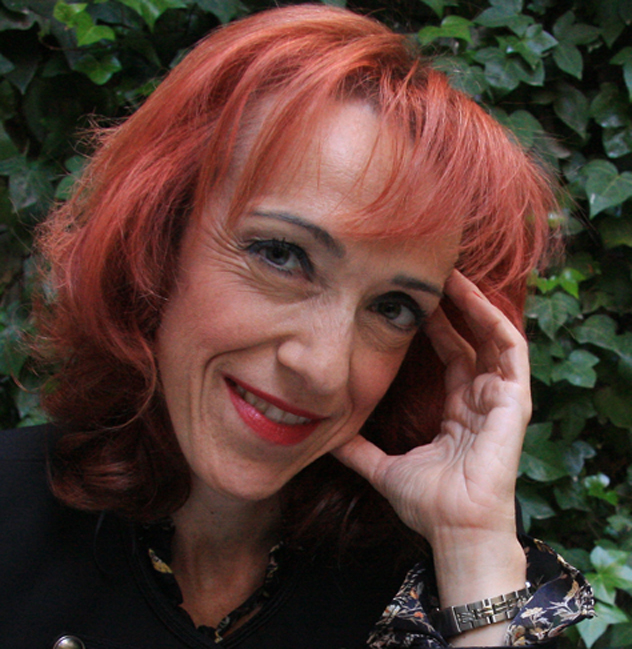 Trained at the Conservatorio Superior de Música de Aragón and at the Schola Cantorum Basiliensis, Pilar Montoya is one of the most relevant harpsichordists, organists and historical dancers on the current scene.
First Prize for harpsichord in Paris, graduated in Orchestra Conducting at Royal School of Music in London, her concert activity takes place in Europe, America and Japan. Regularly invited to participate in conferences and give master classes on baroque music and dance both in Spain and abroad.
Professor at Conservatorio Superior de Música de Castilla y León, Director of the early dance company “Los Comediantes del Arte”, Master’s professor at the Universidad de Salamanca and Universidad Autónoma de Madrid, author of articles on Spanish baroque dance published in specialized magazines, she is currently working on her Doctoral Thesis on theatrical dance under the reign of Felipe V directed by B. Lolo.
Kinski’s Oporto manuscript (1751): between influence and change
(Catarina Costa e Silva)
In the middle of the 18th century (1751), Felix Kinski’s belle dance manuscript is, simultaneously, a source of tradition and transformation. Integrating 12 ballroom dances, 11 for couple and 1 minuet à quatre in Beauchamp-Feuillet notation, this source highlights the effect of the repertoire’s travelling through Europe in a time of social and cultural changes. In this manuscript we find local approaches, meaning Iberian contributions, and we trace the transformations and the spreading of this choreographic and musical French repertoire through Iberia and Latin America. In this paper we will highlight some of these aspects, presenting new sources and inputs for the study of this repertoire’s evolution.
Catarina Costa e Silva, Portugal
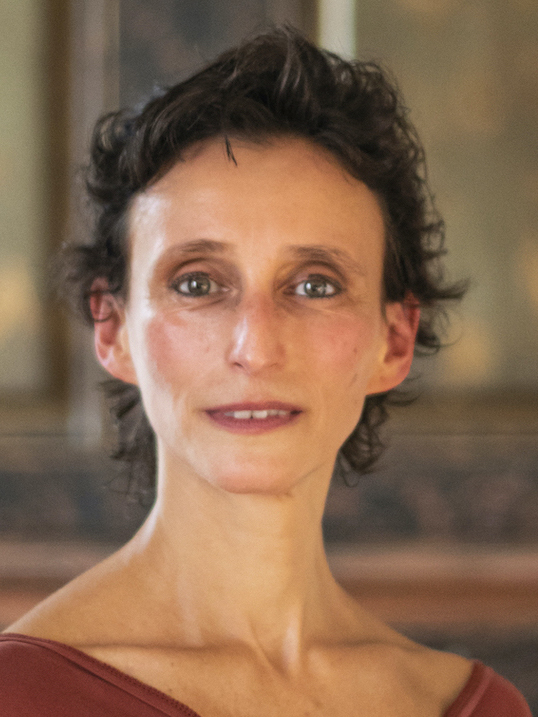
Founder and Artistic Director of Portingaloise, company and festival of Early Dance and Music . Performer of contemporary and early dance, singer, choreographer and stage director. Collaborated with several European groups such as Ensemble Elyma, Divino Sospiro, Capella Sanctae Crucis, O Bando do Surunyo, Orquestra Barroca de Mateus, Orquestra 430 of Vigo, Baroque Orchestra of Casa da Música, among others. Early dance teacher at the Early Music Department of Escola Superior de Música e Artes do Espetáculo- Porto since 2010, as well as intensive training at the Ludovice Ensemble Academia, Early Music Week- Federal University of Minas Gerais, European Union Baroque Orchestra (EUBO), among others. Studied Early Dance with Béatrice Massin, Bruna Gondoni, Catherine Turocy, Cecília Gracio Moura, Diana Campóo, Françoise Denieau, Guillaume Jablonka, Jürgen Schrape, Marie Geneviève Massé, Ricardo Barros, among others. Diplomas: undergraduation in dance; degree in Art History - University of Porto; degree in Singing - ESMAE; Master Music-Theater Studies - University of Sheffield; currently concluding the Phd in Artistic Studies - University of Coimbra.
Matradur and Manimasque: two names and three dance traditions in the first third of the 19th century.
(Dmitry Filimonov)
The turn of the 19th century was the time of tectonic shifts that heavily affected the political and cultural landscape of the European countries. It is particularly fascinating to trace the spread of melodies and specific dances that formed distinct traditions of this period.
The dances Matradur (a longway with improvisational part) and Manimasque (a special quadrille) are frequently mentioned in Russian literature of the first third of the 19th century. At the same time, in Scandinavian countries, Thuringia and Britain, we find longways with names such as Money Musk, Molinasky, and Mollimasse. Although the names are similar to Manimasque, the figures of these dances resemble those of Matradour. The music gives even more puzzles as the tunes of Money Musk and Manimasque coincide. The tunes for Matradour also appear in Sweden, while Austrian music sources contain both Madratur and Manimasque.
In the present work we demonstrate that these two names refer to three closely intertwined dance traditions that were spread in the countries of the Baltic Sea and met at Viena Congress.
Dmitry Filomonov, Moscow, Russia
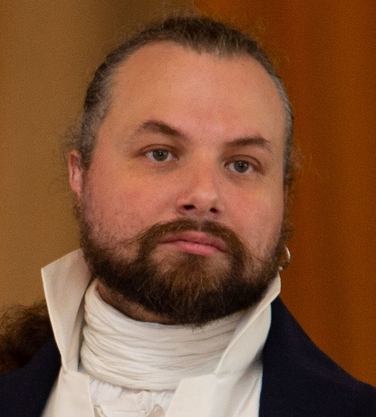 Dmitry Filimonov started his dancing career in 1993 as a dancesport dancer and came to early dances in 2002. Since 2007 he teaches historical dance in “Golden Forests” early dance school (a co-leader of the school). He is the head of the historical dance research seminar in Moscow. Dmitry gave lectures at many international conferences and has seven published articles on early dance topics from 16th to 19th.
Dmitry graduated from Moscow State University and holds a Ph.D. in mathematics.
Dancing Across Seas – French Dance in Australia’s Early Colonies
(Aimee Brown)
In search of refinement, connection and joy, for a colony built on convict labour, it is no surprise that European dance sailed its way to colonial Australia. This paper examines all aspects of French dance in the colonies of Sydney, Tasmania and Melbourne from 1788-1830. How was dance used to connect colonists to home and to each other, and did it play a role in the quest for a refined society? What part did the environment play in shaping the performance, execution, and education of the dances?
This paper draws from a wide array of sources to reconstruct an image of French dance in the early Australian colonies, including home practice books, newspapers, theatre pamphlets and exploration documents. We can look to the teaching methods of two of the early colonies’ French dancing masters, François Girard and Emanuel Charles Greene, and speculate as to how dance may have played a part in interactions between First Nations Australians, the English colonial population, and the French explorers. This paper explores practices on Gadigal, Wangal, Dharug, Palawa, and Naarm country; colonisation had a deep impact on Indigenous Australia and I acknowledge that this land is owned by First Nations Australians and pay my respect to elders past, present, and emerging.
Aimee Brown, Sydney, Australia
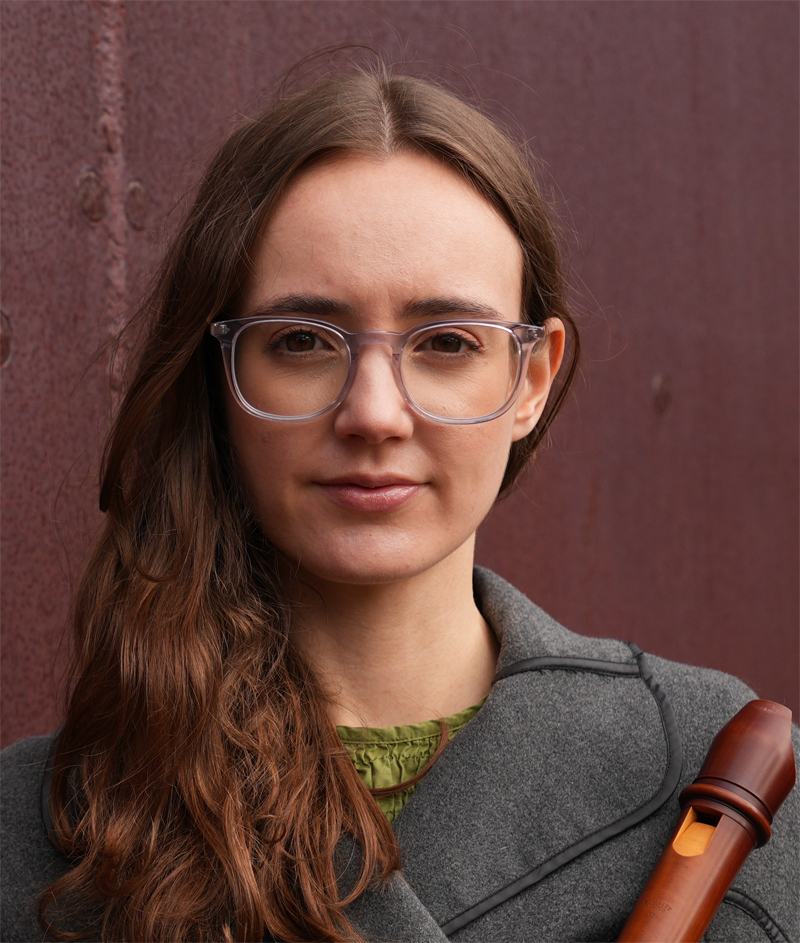
Aimee Brown is a musician, dancer and musicologist from Sydney, Australia. After completing her Honours in Historical Performance at Sydney Conservatorium of Music and Royal College of Music, London, she went on to write her Masters’ thesis on the education of musicians in baroque dance, by developing a simplified notation system. She has been fortunate to present her research on many occasions, including at the International Conference in Historical Performance in Queluz, Portugal and at the Seventh Annual Conference in Historical Performance in Indiana, USA, where she won the prize for student paper.
Aimee works as an historical tour guide, developing and delivering tours about Australia’s Indigenous, convict, and working-class histories. Here, she developed an interest in exploring the significance of dance in Australia’s colonial past.
Aimee runs an historical dance ensemble and studio, Sydney Baroque Ballet. She has taught and performed baroque dance across Australia, including at the National Folk Festival in Canberra and at the Adelaide Baroque Academy. She is thrilled to be attending the Historical Dance Symposium to learn, discuss and collaborate.
Mit Tanzschritten auf dem Seil zu europaweitem Ruhm: Pierre Forioso und Mme Saqui
(Gerrit Berenike Heiter)
Tanz und Seiltanz stehen während des 17. und 18. Jahrhunderts in einer sehr engen Beziehung. Die Mitglieder der Akrobatik- und Seiltanztruppen treten vor allem anlässlich der verschiedenen Messen in Europa auf. Insbesondere in Paris erfreuen sie sich größter Beliebtheit, u. a. das „Théâtre des Grands danseurs du Roi“. Die Begeisterung für diese Art von Unterhaltung lässt auch nicht durch den revolutionären Regimewechsel nach. Im Gegenteil: Seiltänzer und Akrobaten bleiben ein unverzichtbarer Bestandteil der Pariser Theaterszene. Zu Beginn des 19. Jahrhunderts erreicht das Genre einen, in dieser Form später nie mehr erreichten, Ruhm: die Auftritte der Familie Forioso mit Pierre Forioso (1772–1846) sowie von Madame Saqui (1786–1866), Marguerite-Antoinette Lalanne – die „Tochter des berühmten Navarin, des ersten ‚Sauteurs‘ Ludwigs XVI.“– stehen im Zentrum der Fallstudie. Dabei wird ein besonderer Augenmerk auf die Virtuosität ihres Repertoires an Schritten und Tänzen wie Kontratanz, Allemande und Walzer gelegt.
Gerrit Berenike Heiter, Köln, Deutschland
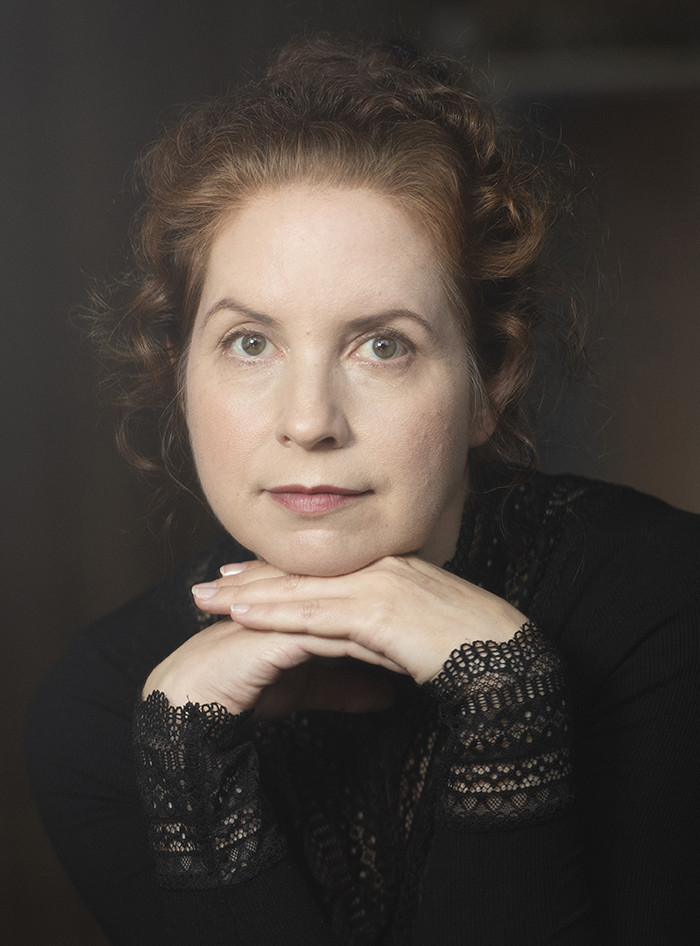 Gerrit Berenike Heiter arbeitet aktuell an ihrem kumulativen Dissertationsprojekt der Theaterwissenschaft an der Universität Wien. Ihre Forschungsarbeit beschäftigt sich mit europäischen Druckerzeugnissen zu Tanz von 1573 bis 1717. Sie unterrichtet Tanzgeschichte an der Hochschule für Musik und darstellende Kunst Mannheim. In ihrer künstlerischen Tätigkeit als Schauspielerin, Tänzerin und Pädagogin hat sie sich auf Körper- und Maskentheater, Commedia dell’arte, Barocktheater und historischen Tanz spezialisiert. Neben der Mitwirkung in barocken Musiktheaterprojekten ist sie im Rahmen zeitgenössischer Stücke zu sehen, die an der Schnittstelle zwischen Tanz, Musik, Performance und Theater stehen.
(Fotografie: Sarah Robine)

